
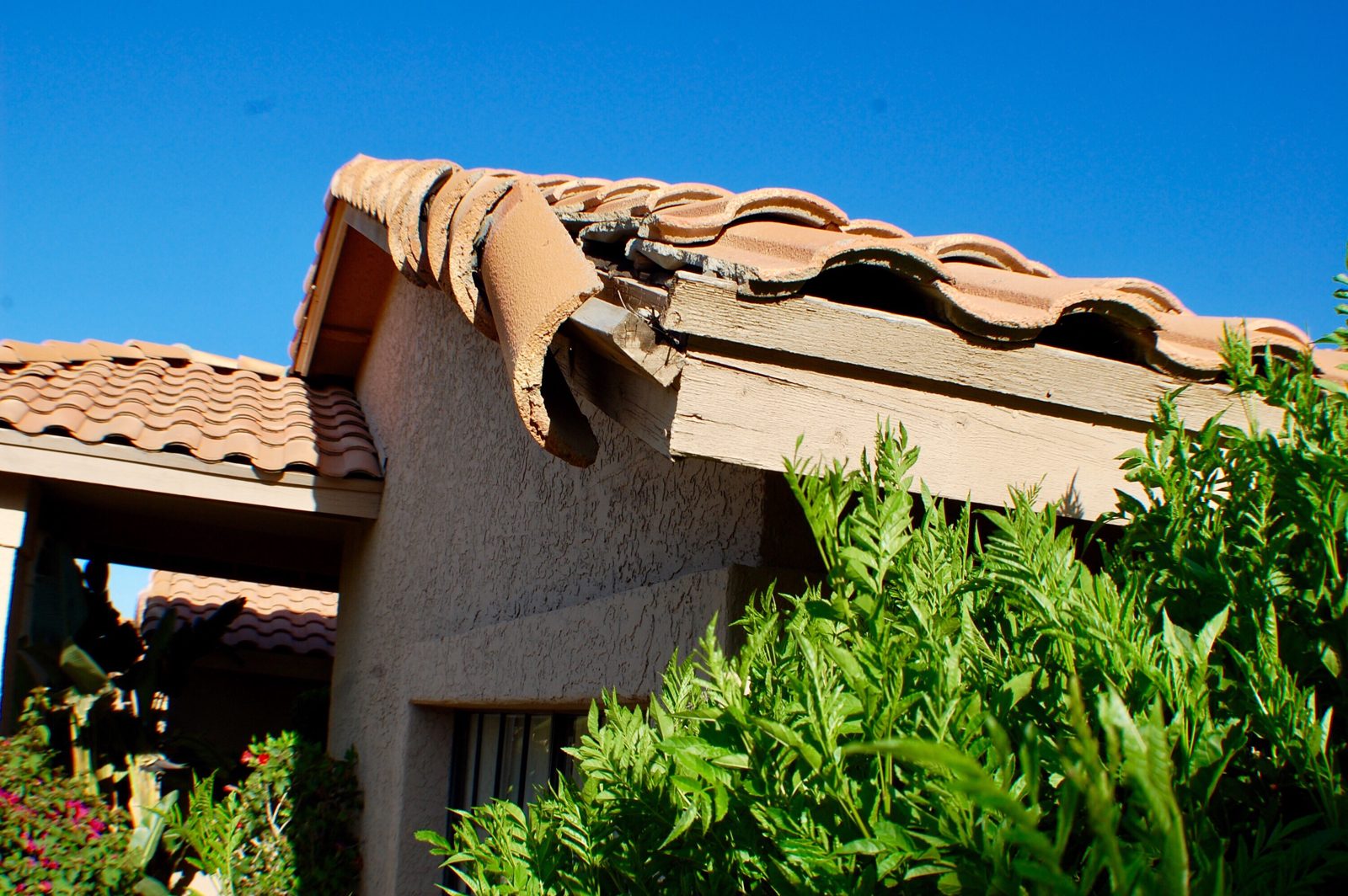
Nobody budgets for a roof repair. It usually shows up as a brown stain on the ceiling after a monsoon storm, a tile that slid out of place, or a flat roof that is suddenly holding water in a spot it never used to. Then the first question hits: what is this going to cost me?
The honest answer is that roof repair prices in Phoenix cover a wide range, and the number on your estimate depends on a handful of things you can actually understand. Once you know what drives the price, you can read a quote with confidence, spot a number that does not add up, and make a smart call about whether to repair or replace.
This guide walks through typical price ranges for the Phoenix area, what pushes a repair up or down, how costs differ by roof type, and what to ask before you say yes. Prices change with materials and labor, so treat every figure here as a ballpark, not a quote.
The short answer: typical roof repair costs in the Phoenix area
Most roof repairs in the Valley fall into three rough buckets. These ranges are general guidance based on what homeowners commonly see, and your own roof could land outside them.
Minor repairs, such as resealing a flashing, replacing a handful of shingles or tiles, or patching a small spot on a foam roof, often run from a few hundred dollars to around $1,000. These are quick jobs with limited materials and a short time on the roof.
Mid-size repairs, like fixing a leak that has traveled under the surface, replacing a section of underlayment, or repairing several areas of a flat roof, commonly land between $1,000 and $3,500. The price climbs because there is more labor, more material, and more time spent finding where the water is really coming from.
Larger repairs, including damaged roof decking, storm damage across multiple slopes, or major sections of a flat roof system, can reach $3,500 to $7,000 or more. At that point it is worth asking whether a partial replacement or a full roof installation makes more financial sense, which we will get to below.
One more number worth knowing: many roofers charge a minimum service fee even for the smallest job. Sending a crew and a truck across the Valley costs money no matter how small the fix is, so a very low price for a simple repair is not unusual, and a very low price for a complicated repair deserves a second look.
What actually drives the price of a roof repair
Two roofs with the same leak can produce two very different quotes. Here is what moves the number.
The size and location of the damage
A single cracked tile near the edge of a one-story home is a small job. The same cracked tile in the middle of a steep, two-story roof takes more time, more safety equipment, and more care. Roof pitch and height matter because they change how a crew moves, how materials get up there, and how long the work takes.
Your roofing material
Spray foam, tile, asphalt shingle, metal, and flat membrane roofs all repair differently. Some need specialty materials, some need specific skills, and some are easier to match than others. A foam roof repair, for example, involves cleaning the area, applying new foam where needed, and recoating the repaired spot so it is protected from UV. A tile repair involves lifting surrounding tiles, replacing the broken ones, and checking the underlayment beneath.
Hidden damage underneath
This is where estimates change the most. What looks like a small leak from inside the house may have been soaking into the underlayment or decking for months. When a crew opens up the area and finds wet or rotted material, the scope grows. A good contractor will explain this possibility up front, because nobody wants a surprise halfway through the job.
How long the problem has been there
A fresh leak caught early is almost always cheaper than one that has been dripping for a season. Water that sits in insulation or runs along framing spreads damage well beyond the original entry point. This is one reason a regular roof inspection pays for itself. Small issues stay small.
Timing and urgency
Emergency repairs after a storm usually cost more than scheduled repairs. A temporary tarp or patch to stop active leaks is one expense, and the permanent repair that follows is another. If you can stop the water safely and schedule the permanent fix, you may have more flexibility on price, though you should never wait so long that interior damage starts.
Permits and access
Most small repairs do not need a permit, but larger scopes can. Tight access, such as a roof surrounded by block walls, mature trees, or a pool deck, can also add time. These are normal line items and a clear estimate will mention them.
Repair costs by roof type in Phoenix
Every roofing system has its own repair profile. Here is how the common ones compare for Valley homes and buildings.
Spray foam roofs
Spray foam is popular across Arizona for flat and low-slope roofs because it forms a continuous, insulating layer that handles heat well. Repairs are typically straightforward: the area is cleaned, damaged or soft foam is removed, new foam is applied, and the spot is recoated. Small foam repairs tend to be on the lower end of the price range. The bigger cost question for foam roofs is usually the protective coating. If the coating has worn thin, a foam roof recoating can prevent repairs from piling up in the first place.
Tile roofs
Tile is durable, but the tile itself is rarely the weak point. The underlayment beneath it wears out long before the tile does, often in 15 to 25 years in Arizona heat. A repair that starts as replacing a few broken tiles can turn into a larger underlayment job if the layer below has dried out and cracked. Matching older tile can also take some hunting, which may affect price and timing.
Asphalt shingle roofs
Shingle repairs are usually among the more affordable, especially for localized damage like missing or lifted shingles. Intense sun bakes shingles, so they can become brittle and crack earlier than you might expect. If shingles are curling or shedding granules across the whole roof, patching may only buy you a short window.
Flat and low-slope roofs
Flat roofs are common on Phoenix commercial buildings and on many homes with modern designs. Ponding water, cracked seams, and failed flashing around vents and parapet walls are the usual culprits. Costs vary widely because the repair could be a quick seam fix or a larger section of membrane work. A flat roof that holds water after rain is worth looking at sooner rather than later, since standing water speeds up wear.
Metal roofs
Metal roofs are tough, and most repairs involve fasteners, sealants, or flashing rather than the panels themselves. Thermal expansion in Arizona heat can loosen fasteners over time, so a periodic check keeps small issues from becoming leaks.
Why Phoenix roofs have their own price quirks
Roofing here is not the same as roofing in a mild climate, and that shows up in repair bills.
Heat and UV are the constant. Summer roof surfaces can climb far beyond the air temperature, and that wears down sealants, coatings, and flashings faster than you would expect. Materials that last decades elsewhere may need attention sooner here.
Monsoon season adds the sudden stress. Strong winds can lift edges and shift tiles, and heavy rain finds every weak spot at once. The weeks after a big storm are the busiest time for roofers across the Valley, so scheduling can stretch and emergency work may carry a premium. If you have had a rough storm, you may want to read about emergency repairs after monsoon storms on our blog and get on the schedule early.
Summer working conditions matter too. Crews often start at dawn to stay safe in the heat, and some repair materials have temperature requirements for proper curing. A good contractor plans around these, and it can influence when a job is scheduled.
Finally, many homes across Phoenix, Scottsdale, Mesa, Tempe, Chandler, and Gilbert are mid-aged, built during growth years when roofs were installed on a similar timeline. That means plenty of roofs are reaching the same age together, and repair demand rises with them.
Repair or replace? Where the line sits
This is the question behind most cost conversations. A repair is the right move when the damage is localized, the rest of the roof is in decent shape, and the roof still has meaningful life left. A replacement starts to make sense when repairs keep coming back, when damage is spread across large areas, or when the roof is near the end of its expected lifespan.
A helpful rule of thumb is to compare the cost of the repair against the remaining useful life of the roof. If you are spending a significant share of what a new roof would cost on a roof that is already past its prime, the money may be better invested in a new system. If the roof is relatively young and the damage is a one-time event, repair almost always wins.
For foam roofs, there is often a middle path. Instead of replacing a worn system, a fresh coating can restore protection and extend its life at a fraction of the cost of tearing off and starting over. That is one of the real advantages of spray foam in this climate.
If you are unsure which side of the line you are on, an inspection gives you real information instead of guesses. An honest contractor will tell you when a repair is enough and when it is not.
How to read a roof repair estimate
A good estimate is specific. When you get one, look for these things.
First, a clear description of the problem and the proposed fix, in plain language. If the estimate just says “repair roof,” ask for more detail. Second, a breakdown of materials and labor, or at least a clear scope of work. Third, what happens if hidden damage is found, including how it will be communicated and approved before extra costs are added. Fourth, warranty terms on both the work and the materials. Fifth, proof of licensing and insurance, which protects you if something goes wrong on the job.
Be cautious with quotes that are far lower than the rest, with pressure to sign on the spot, or with contractors who knock on your door after a storm and ask for large payments upfront. A reputable local company will be comfortable giving you time and answering questions.
Getting two or three estimates is reasonable for larger repairs. Compare the scope, not just the price, because the cheapest quote often leaves things out.
Ways to keep roof repair bills smaller
You cannot avoid every repair, but you can avoid a lot of expensive ones.
Schedule an inspection once a year, ideally before monsoon season, and again after any major storm. Catching a cracked seal or loose flashing early is the cheapest repair you will ever buy. A simple roof maintenance plan covers cleaning debris, checking sealants, and flagging small issues before they grow.
Keep the roof clear of leaves, branches, and debris that hold moisture and block drainage. Trim overhanging branches that could drop limbs in a storm. Check your gutters and downspouts so water has somewhere to go.
Pay attention inside the house too. New ceiling stains, a musty smell in the attic, or a spike in cooling bills can all point to roof trouble. Take photos when you notice something, since dated pictures help any insurance conversation.
Do not ignore small leaks. A drip that stops when the rain stops has not fixed itself. The water simply found somewhere to wait.
What to do before you call a roofer
A little prep makes your estimate more accurate and your conversation faster. Note where you see signs of a leak inside, and when it appears, such as only after heavy rain or all the time. Take photos of ceiling stains and any visible roof damage from the ground. Do not climb onto the roof yourself, especially in summer heat, since falls and heat exposure are real risks. Find your roof’s approximate age and material, along with any paperwork from past work. If you suspect storm damage, check your homeowner’s policy and deductible, since that can affect how you approach the repair.
Then book an inspection. Even if the repair turns out to be simple, you walk away with a clear picture of the whole roof instead of one problem spot.
Frequently asked questions
How much does a small roof repair cost in Phoenix?
Small repairs, such as replacing a few tiles or shingles, resealing flashing, or patching a small spot on a foam roof, commonly run from a few hundred dollars to about $1,000. Many roofers charge a minimum service fee, so very small jobs often cost the same as a slightly larger one.
Does homeowner’s insurance cover roof repair in Arizona?
It depends on the cause. Sudden damage from a covered event like a severe storm is often covered, while wear and tear and lack of maintenance usually are not. Review your policy and deductible, document the damage with photos, and ask your insurer what is required before work begins.
How long does a roof repair take?
Many repairs are finished in a few hours to a day. Larger repairs involving decking, underlayment, or multiple areas can take a few days, depending on weather, material availability, and what is found once the area is opened up.
Is it better to repair or replace an older roof?
If damage is limited and the rest of the roof is sound, repair is usually the better value. If repairs keep returning, damage is widespread, or the roof is near the end of its life, replacement often costs less over time. For foam roofs, a recoat can be a smart option between those two choices.
Roof repairs are never fun, but they do not have to be mysterious. If you are seeing signs of trouble, or you just want to know where your roof stands before the next storm, the team at Foam Co Roofing is happy to take a look and give you a straight answer. You can learn more about our roof repair services, or call us at (480) 743-2348 to set up an inspection anywhere in the Greater Phoenix area.